
Why Seniors Miss Doses (and How to Prevent It)

Missed and duplicate doses are among the most common medication problems for older adults managing their own care. Most of the time, it’s not carelessness — it’s a handful of predictable, fixable causes.
Common Reasons Doses Get Missed
- Multiple medications, multiple schedules. Once someone is managing more than two or three prescriptions with different timing, it’s easy to lose track.
- No clear visual or audible cue. A pill bottle on the counter doesn’t remind anyone of anything at 2pm.
- Memory changes, which can affect whether a dose taken an hour ago is remembered at all.
- Vision changes that make it hard to read labels or tell similar pills apart.
- Travel or a change in routine, which throws off whatever system was working at home.
Why It Matters
A missed dose can mean a condition goes unmanaged for a day. A duplicate dose can mean taking twice what was prescribed. Neither is a small thing when it happens repeatedly, which is exactly what tends to happen once a schedule starts slipping.
Practical Prevention Strategies
- Simplify where possible. Ask a pharmacist whether doses can be consolidated or timed together.
- Separate “what” from “when.” A weekly organizer solves sorting; it doesn’t solve reminding. Those are two different problems.
- Make the reminder impossible to miss. Visual alerts (lights) work for hearing changes; audible alerts work for vision changes. Ideally, both.
- Build in a way to check, not just guess. For a caregiver managing this from a distance, knowing a dose was actually dispensed is worth more than a phone call asking “did you take your pills?”
How Technology Helps
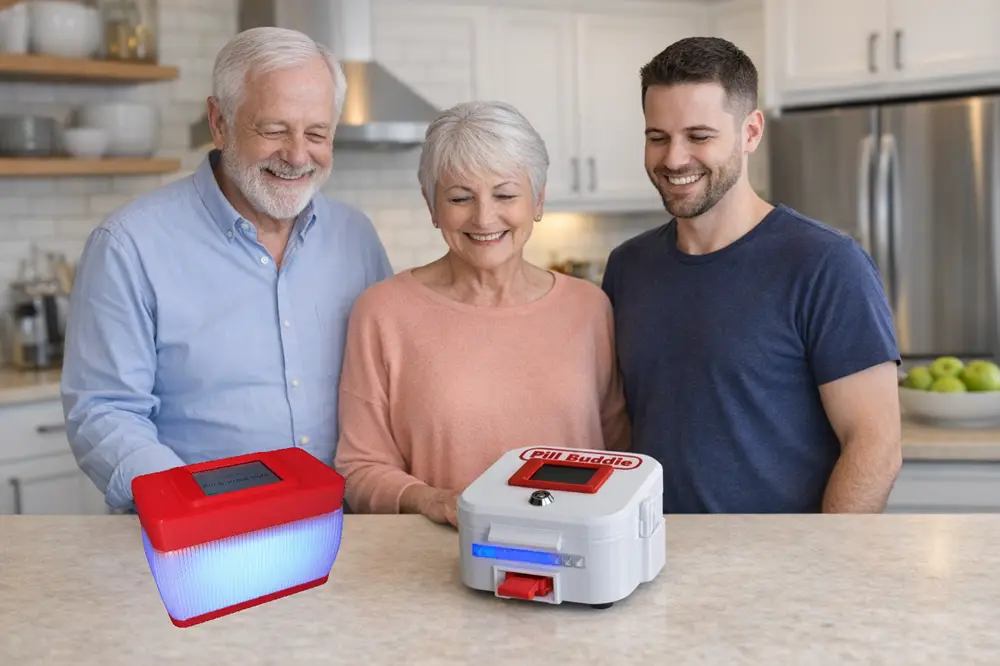
This is exactly the gap an automatic pill dispenser is built to close. Pill Buddie Lockable and Pill Buddie Classic both handle the sorting and the reminding — pre-loaded doses are released on schedule, with persistent LED and audible alerts until the tray is removed. If you still have questions about how scheduling, refills, or travel days work in practice, our FAQ covers the most common ones.
PillBuddie is not a medical device. It dispenses pre-loaded medication on a schedule set by the user or caregiver; it does not diagnose, prescribe, or verify that medication was taken correctly.